
As enterprises' cross-border business grows, choosing a suitable Cambodia CN2 return-to-China server has become a core factor in ensuring access speed and stability. This article aims to provide IT decision-makers with actionable evaluation dimensions to help reduce risks caused by network jitter and packet loss while meeting business continuity and compliance requirements.
Routing and Latency: Evaluate CN2 line quality
For Cambodia CN2 return servers, the primary assessment is the degree of direct connection between the routing node and the return link. High-quality CN2 lines typically have fewer intermediate hops and more stable BGP strategies, thereby reducing latency and packet loss. Conduct multi-period PING and MTR tests, referencing average RTT and packet loss rates to provide quantitative basis for routing business traffic.
Bandwidth, concurrency, and stability metrics
When selecting a server, evaluate bandwidth requirements based on peak concurrency and business type. In addition to continuous bandwidth, attention should be paid to the capacity to handle burst traffic and uplink and downlink equivalence. Reasonably reserve redundant bandwidth and enable traffic shaping or speed limiting strategies to keep services available during traffic surges, avoiding single-point bandwidth bottlenecks that cause interruptions for returning home business.
Traffic scheduling and emergency protection
Achieving multi-link or flow balancing can reduce the impact of single-link failures. By combining DDoS protection and traffic cleaning strategies, along with traffic mirroring and backup links, core business reachability and stability can be maintained during attacks or congestion.
Data center location and redundant deployment
Thephysical location, backbone interconnections, and power supply cooling standards of data centers directly affect server stability. Preferred data centers are directly connected to backbone networks and equipped with redundant multi-room data, enabling disaster recovery across data centers and nearby access. When evaluating data center interconnection, attention should also be paid to link diversity and automatic failover capability.
Security compliance and data protection requirements
Enterprises returning to China often involve cross-border data transmission and compliance constraints. Select Cambodia CN2 return servers must clearly define data encryption, access control, and log retention policies to ensure compliance with the laws and regulations of the industry and target market. At the same time, review backup and recovery processes to reduce the risk of data loss.
Service provider selection and technical support capabilities
Theprovider's operational response, SLA, and localization support are crucial for long-term stability. When evaluating suppliers, focus on fault handling timelines, monitoring transparency, and whether dedicated lines are provided, and whether they optimize acceleration or customized network configurations. The contract should clearly specify network availability and compensation mechanisms.
Deployment recommendations and operations monitoring strategies
During deployment, it is recommended to first conduct small-scale pilots, conduct real traffic stress tests, and establish a multi-dimensional monitoring system. By combining real-time link monitoring, application performance (APM), and alert strategies, performance degradation can be identified in advance. Regular exercises on failover and recovery processes ensure that business operations in China can operate smoothly even under abnormal conditions.
Summary and suggestions
In summary, selecting a Cambodia CN2 server should be evaluated comprehensively from routing quality, bandwidth and concurrency capabilities, data center redundancy, security compliance, and provider support. It is recommended to first conduct quantifiable tests, confirm monitoring and disaster recovery plans, and then gradually scale up traffic to ensure that enterprises returning to China achieve a balance between stability and compliance.
- Latest articles
- Practical Sharing Of How To Log In To Alibaba Cloud Servers In Japan And Execute Emergency Fault Handling Cases Using A Mobile Phone
- How To Determine Which US Server Hosting Provider Is Best: Analyzing Both Service And Reputation
- Where Can I Find Affordable And Reliable Entry-level Cloud Server Recommendations For Small Businesses In Vietnam?
- Complete Tutorial On How To Configure A Singapore Server Cloud Server On Alibaba Cloud Or Other Platforms
- Best Hardware Configuration Recommendations For Deploying Cambodia VPS For Private Clouds And Distribution Nodes
- The Hong Kong Server Cluster Maintenance Checklist Covers Key Points For Comprehensive Inspections From Hardware To Network
- Enterprise Security Manual: What Level Of Password Is Considered Secure For German Servers?
- Performance Test: US Private VPS 120 Information Network Bandwidth And Latency Measurement Report
- What Is A Native IP Proxy In South Korea, Which Bypasses Applications In Multi-account Management And Regional Restrictions?
- Operating Cost Comparison With Vietnam's CN2 VPS And Other Cost-performance Evaluation Methods For Other International Routes
- Popular tags
-

Precautions And Security Recommendations For Deploying Cambodia’s CN2 Domestic Servers In Cross-Border Work
Guidelines and security recommendations for deploying Cambodia’s CN2 domestic servers in a cross-border office environment, covering network architecture, compliance, performance optimization, security protection, and operations monitoring, to help enterprises improve access stability and compliance. -

Share The Experience Of Cambodian CN2 Returning Server
Share the experience of using CN2 back to China in Cambodia, discuss its advantages and disadvantages, and provide practical suggestions for users. -
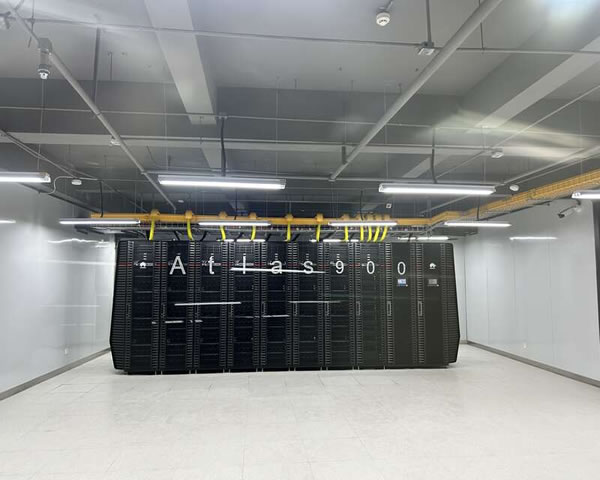
The Importance Of Cambodian Cn2 Server In Accelerating Return To China
this article discusses the importance of the cambodian cn2 server in accelerating return to china, and analyzes it from aspects such as network stability, speed, and latency.